Bedding · Materials Guide
Choosing a Natural-Fiber Topper: Wool, Cotton, and Comfort
A topper can change the character of a bed without asking you to replace the mattress beneath it. The right one may add a little cushioning, help manage moisture, or provide a protective layer between sleeper and mattress. Wool and cotton each bring a distinct temperament to the task; understanding their feel, construction, care, and certifications makes choosing less about a label and more about how you actually sleep.
Published November 5, 2026
First, decide what you want a topper to do
“Topper” is an expansive word. It can describe a substantial layer intended to soften a mattress, a quilted pad that adds modest comfort, or a moisture-resistant protector designed primarily to shield the bed. Some products do more than one job, but these functions are not interchangeable. A thin wool moisture pad, for example, is not necessarily a plush comfort topper; a quilted cotton pad may add a gentle surface layer without materially changing the support of a firm mattress.
Before comparing fibers, name the problem you hope to solve. Is the mattress too firm at the surface? Do you want a barrier against spills? Does the bed feel warm or clammy overnight? Are you looking for a layer that can be washed at home? A clear answer helps distinguish a comfort upgrade from a practical piece of bedding—and prevents the disappointment of expecting a thin protector to transform an unsupportive mattress.
It is also useful to separate surface comfort from structural support. A topper can alter the initial feel of a mattress, but it cannot reliably repair a sagging core or correct a bed that no longer supports your body well. Thickness, density, quilting, and the materials beneath the cover all shape the result. Natural fiber is one part of the decision, not a guarantee of a particular firmness, temperature, or lifespan.
Wool: a softly resilient, moisture-aware layer
Wool has a particular appeal for sleepers who value a dry, temperate surface. Its fibers can absorb moisture vapor and release it gradually, which is one reason wool is often used in bedding intended to manage humidity. It may feel warm and comforting in a cool room while remaining less clammy than some dense, poorly ventilated layers. That does not mean wool actively cools every sleeper: room temperature, mattress construction, duvet weight, pajamas, and personal physiology all matter.
In a topper or moisture pad, wool’s character depends on how it is processed and arranged. Lofty wool batting can provide a cushioned, springy feel; tightly felted wool is denser and may function more like a protective layer than a plush one. Quilting or hand-tufting can help keep filling in place, while a pad with straps or elastic may be easier to secure. Read the construction details rather than assuming that every wool product feels alike.
Wool may suit people who want natural moisture management, a layer with some resilience, or a protector that offers water resistance rather than a fully waterproof seal. Those distinctions matter. Water-resistant is not synonymous with waterproof, and a natural fiber pad may not be the right choice where dependable protection from frequent or substantial spills is essential. For households with children, older adults, or pets, consider the specific risk and the maker’s stated performance rather than relying on a broad material description.
Care tends to be more deliberate than for ordinary cotton bedding. Depending on the product, wool may be refreshed by airing, spot-cleaned, hand-washed, or washed on a gentle cold cycle. Drying instructions are especially important: some wool pads must be laid or hung to dry and should not go in a tumble dryer. Heat, agitation, and unsuitable detergents can affect wool’s shape and texture. Check the care label before purchase and consider whether the routine feels realistic for your home.
Cotton: familiar, breathable, and often easier to launder
Cotton is the familiar staple: soft to the touch, breathable in many constructions, and available in a wide range of weaves and weights. As a topper or quilted pad, it can add a modest layer of softness while keeping the bed’s overall feel relatively direct. Cotton is not automatically cool or lightweight, however. A thick, densely quilted pad may hold more warmth than a thin percale layer, and the fill, weave, and finish influence performance as much as the fiber name.
Its everyday advantage is often care. Many cotton pads can be machine-washed, although washing temperature, cycle, and drying method differ by product. A removable or washable layer can be useful for routine maintenance, especially when the topper is intended to protect the mattress from dust, skin oils, or everyday wear. Confirm the dimensions and depth, too: a fitted style needs to accommodate the mattress height, while straps or a flat design may suit other setups.
Organic cotton refers to the agricultural and processing standards covered by a particular certification or claim; it does not describe the pad’s softness, thickness, or durability by itself. Two products made with organic cotton can feel very different. One might be a light jersey cover, another a quilted pad with cotton filling, and another a waterproof protector that uses cotton as its top fabric. Look for a clear breakdown of the materials in each layer.
Cotton can be a practical choice for sleepers who prefer a familiar hand-feel, want relatively straightforward washing, or need a light surface layer rather than a lofty cushion. For anyone sensitive to heat or moisture, the complete construction deserves attention: a breathable cotton face does not necessarily make an impermeable backing breathable, and a dense filling may change airflow. Product specifications should describe the full assembly, not just the fabric closest to the sheet.
Wool versus cotton: the everyday differences
In broad terms, wool is often selected for moisture management and a gently springy, insulating feel; cotton is often chosen for familiar softness and convenient laundering. These are tendencies, not promises. A thin wool pad may feel firmer and flatter than a plush cotton topper, while a thick cotton quilt can feel warmer and more substantial than a lightly filled wool layer. The details of construction are decisive.
| Consideration | Wool | Cotton |
|---|---|---|
| Typical appeal | Moisture-aware comfort and a naturally resilient feel | Familiar softness and a broad range of light-to-quilted constructions |
| Surface feel | May be springy, lofty, dense, or felted, depending on construction | May feel smooth, crisp, soft, or cushioned, depending on weave and fill |
| Care pattern | Often calls for airing, spot care, or gentle washing and careful drying | Often machine-washable; follow the product’s temperature and drying guidance |
| Best question to ask | Is it water-resistant, and exactly how should it be cleaned? | What are the cover, fill, backing, and wash instructions? |
Neither fiber is universally superior. The best natural-fiber topper is the one whose feel, protective function, care routine, and verified materials make sense for your bed and household. A decision grounded in daily use is usually more useful than choosing by the most persuasive sustainability language alone.
How construction changes comfort
Fiber content is only the opening line. Thickness is an obvious variable, but the way a topper is assembled can be just as important. Quilting creates channels or squares that hold fill in place and may produce a gently padded surface. Tufting joins layers at intervals, helping limit movement of the batting. A flat felted pad can sit closer to the mattress and offer protection with little added loft. These differences influence drape, texture, and how easily a layer shifts during the night.
Attachment matters, too. Elastic straps at the corners can hold a pad in position while leaving more of the mattress perimeter exposed; a fitted skirt wraps around the sides and may be easier to place but needs to match mattress depth. A flat pad can be simple to lift and air, though it may move more readily. Check the finished dimensions, mattress-size compatibility, and whether the design is intended to sit under a fitted sheet.
Think about the rest of the bed. A thick topper may make fitted sheets too shallow, raise the sleeping surface, or alter how a mattress edge feels. On an adjustable base, a bulky or loosely attached layer might shift as the bed moves. If the topper is meant to protect a mattress warranty, consult the mattress maker’s care requirements; using a particular protector or allowing moisture damage may affect coverage, so it is worth checking before settling on a design.
Read certifications as evidence, not decoration
Terms such as “natural,” “organic,” and “eco-friendly” can appear on product pages with varying levels of detail. A certification can provide a more specific framework, but its relevance depends on what has been certified. For textiles, GOTS is a standard associated with organic fibers and processing criteria. When evaluating a product, check whether the certification applies to the finished item, a particular material, or a facility, and look for the certifier or license information where available.
Do not assume that a certified cover means every inner component has the same status. A topper may combine certified cotton fabric, wool filling, elastic, thread, and a backing made from another material. Ask for a component-by-component account if the product description is unclear. This is especially important when the purchase is motivated by a specific concern about fiber origin, processing, or skin contact.
Certifications also answer different questions. A standard focused on organic textile processing does not necessarily establish how soft a pad will feel, whether it will suit a particular allergy, or how long it will last. Nor does a material’s natural origin make it maintenance-free. Treat standards as useful parts of the evidence, alongside construction details, care guidance, sourcing disclosures, and a warranty.
When claims seem vague, ask concise questions: What is the fiber percentage in each layer? Is the fill certified, or only the outer fabric? Is the pad water-resistant or waterproof? Which cleaning methods are permitted? Are dimensions measured before or after washing? A clear answer is a mark of useful product information, not an unnecessary complication.
A closer look at a wool moisture pad
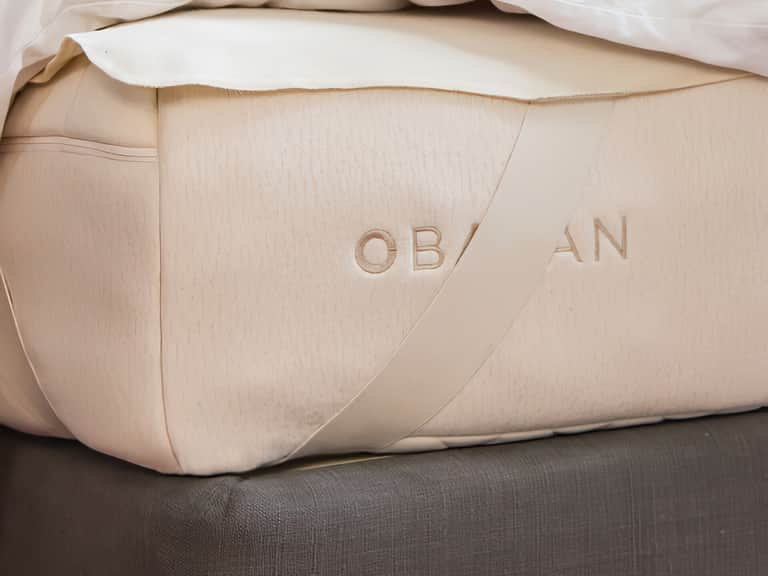
The Obasan Organic Wool Moisture Pad Protector illustrates the distinction between a wool comfort layer and a protective pad. Its product information describes pure organic wool, tightly felted fibers, water-resistant protection, and elastic straps to help keep it in place. It is GOTS-certified, and the maker’s care directions call for airing as needed or hand-washing or gentle cold machine-washing, followed by hanging to dry indoors. The instructions advise against tumble-drying.
That combination may appeal to someone looking for a natural-fiber layer with a practical protective role and who is comfortable with careful maintenance. Its water-resistant description should not be read as a promise of complete waterproofing. As with any pad, the fit, mattress dimensions, and household’s likely spills should be considered before choosing it. The product is offered in standard bed sizes, with a three-year warranty stated in its listing; consult the seller for the current details and any certification documentation you want to verify.
A considered buying checklist
Before adding a topper to your bed, use this short checklist to bring comfort and practicality into the same conversation:
- Define the job. Decide whether you need cushioning, moisture management, mattress protection, or some combination.
- Check the full fiber content. Identify the cover, filling, backing, and other components rather than relying on a headline claim.
- Assess thickness and construction. Look for details about quilting, felting, tufting, fill weight, and finished depth.
- Match the attachment to your mattress. Compare size, mattress depth, straps or fitted edges, and any adjustable-base requirements.
- Read the care label first. Make sure the recommended washing and drying routine is realistic for your schedule and equipment.
- Verify claims and certifications. Find out which materials or stages a certification covers and request documentation if needed.
- Consider performance limits. Distinguish water resistance from waterproofing, and modest cushioning from meaningful support.
- Review returns and warranty terms. Comfort is personal; understand the trial period, exclusions, and care conditions before purchasing.
Care that helps a topper last
Follow the care instructions for the specific product rather than applying a universal routine. Wool often benefits from being aired when appropriate and kept dry between uses; cotton may tolerate regular machine-washing but can shrink or wear if washed or dried too aggressively. Avoid bleach and fabric softener unless the maker explicitly permits them. For any topper, address spills promptly, and allow a washed layer to dry fully before putting it back on the mattress.
Use a correctly sized fitted sheet and avoid forcing a topper into a wash cycle that cannot accommodate its bulk. A compressed, crowded load may not clean evenly, while excessive heat can damage fibers, seams, elastic, or backing materials. If the care label recommends hand-washing or spot-cleaning, that is part of the product’s ownership requirements—not a minor footnote.
Regularly check for bunching, thinning, broken straps, or signs of trapped moisture. Airing a bed can help keep the surface fresh, but it does not replace washing when the label calls for it or professional advice when a product is heavily soiled. A removable pad can make maintenance easier, though a natural-fiber layer still needs appropriate care to remain comfortable and useful.
The quiet luxury of choosing well
A topper is a relatively small intervention with an outsized effect on the first moments of getting into bed. Wool brings a textured, resilient sensibility and is often valued for its moisture-handling qualities. Cotton offers a familiar, adaptable surface and can be easier to wash, depending on its construction. Neither fiber is a shortcut to perfect sleep, and neither can compensate for a mattress that no longer meets your needs.
Choose by function first, then compare materials, feel, fit, certifications, and care. The most satisfying layer is not necessarily the thickest, the most expensive, or the one with the most elaborate claims. It is the one that feels right under your sheets, performs the job you intended, and can be cared for without turning an ordinary bedroom routine into a chore.
Frequently asked questions
Is a wool topper cooler than a cotton topper?
Not automatically. Wool is valued for moisture management and can help the sleep surface feel less clammy, but warmth depends on loft, density, room conditions, bedding, and the sleeper. Cotton also varies: a light layer may feel airy, while dense quilting can retain more warmth. Compare complete constructions rather than fiber names alone.
Can a natural-fiber topper make a firm mattress softer?
A padded or lofty topper may soften the initial surface feel to some degree. A thin, tightly felted protector is more likely to provide a modest barrier than a substantial comfort change. If a mattress is sagging or lacks adequate support, a topper is unlikely to correct the underlying problem.
Is water-resistant the same as waterproof?
No. Water resistance means a material may offer some protection from moisture, but it does not promise that liquid will be fully blocked under every condition. If complete liquid protection is essential, check for an explicit waterproof claim and read the construction and care details carefully.
What should I check before washing a cotton or wool topper?
Check the sewn-in label or manufacturer’s instructions for water temperature, cycle, detergent, drying method, and any restrictions. Wool may require airing, spot-cleaning, gentle cold washing, and air-drying. Cotton is often machine-washable, but shrinkage and damage remain possible if the care directions are ignored.